Description
If you are employed in a state that uses a registry to track professional development hours, you will be able to provide your registry ID (Stars, MOPID, Registry or other ECE ID#) after you have completed the quiz for the course. If you pass the quiz we will report your course completion to the state registry using the registry ID that you provide.
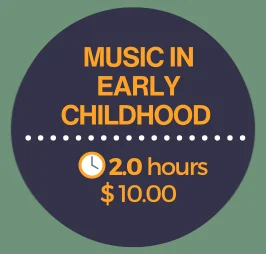
Explore the many ways music supports young children’s development and learning. Designed for early childhood educators and childcare professionals, this course examines how music can encourage creativity, social-emotional development, language skills, academic learning, motor development, confidence, perseverance, anxiety management, and positive behavior. Participants will explore practical examples and consider how music can be intentionally incorporated into daily classroom experiences. Apply these strategies to create meaningful music experiences that engage children while supporting development across multiple learning domains. Course length – 2.0 hours.
The course will help answer the following questions:
-
How does music encourage creativity?
-
How does music help social-emotional skills?
-
How does music help with academic success?
-
How does music help with gross motor skills?
-
How does music help with fine motor skills and hand-eye coordination?
-
How does music help with confidence and anxiety management?
-
How does music encourage perseverance?
-
How does music help with behavior?
-
How does music help with language skills?
Participants who successfully complete this course will be able to:
-
Explain how music supports children’s academic success.
-
Describe how music supports children’s social development, confidence, and emotional well being.
-
Explain how music activities promote the development of fine motor and gross motor skills.