Description
If you are employed in a state that uses a registry to track professional development hours, you will be able to provide your registry ID (Stars, MOPID, Registry or other ECE ID#) after you have completed the quiz for the course. If you pass the quiz we will report your course completion to the state registry using the registry ID that you provide.
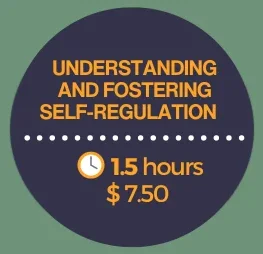
Understand the reasons behind children’s challenging behaviors and learn practical strategies for responding with understanding rather than frustration. Designed for early childhood professionals, this self-paced course explores how to identify what children may be communicating through their behavior, recognize possible causes, and develop plans to prevent challenging behaviors. Participants will engage with practical strategies for observing, assessing, communicating with families, and choosing appropriate responses to create smoother, more positive experiences for children and educators. Course length – 1.5 hours.
This course helps answer the following questions:
-
How can I plan to ACT before the challenging behavior rather than REACT to it?
-
Why is it okay not to treat every child the same?
-
Should I have a standard set of rules for the classroom?
-
How can I better interpret what the child is trying to communicate through the behavior?
-
How can I make time to assess each child’s behavior with everything else I am doing?
-
What are some common reasons behind a child’s challenging behaviors?
-
What are some ways to connect with family members and learn more about the children?
-
What are some reasonable consequences to challenging behavior?
Participants who successfully complete this course will be able to:
-
Analyze observation and assessment information to identify children’s behavioral patterns, strengths, and needs with 80% accuracy on the course assessment.
-
Develop an individualized behavior-support plan that includes at least three proactive strategies for addressing challenging behaviors.
-
Create a lesson plan that includes at least three strategies for supporting children’s social-emotional needs and reducing challenging behaviors.